
Mixed Media
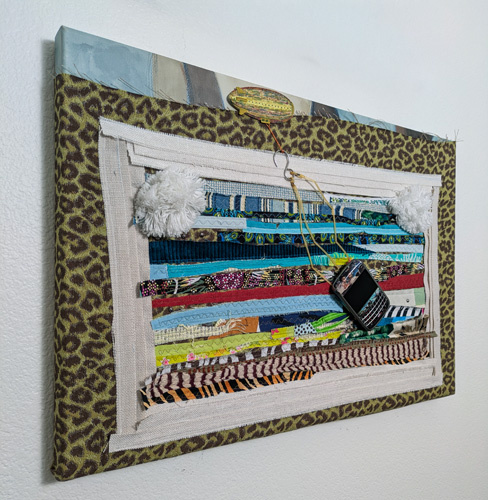
A Personal Reliquary
Fiber collage on reclaimed canvas using thread painting, handmade paper, and 2006 mobile tech. A study in digital ruins and artisanal rituals.
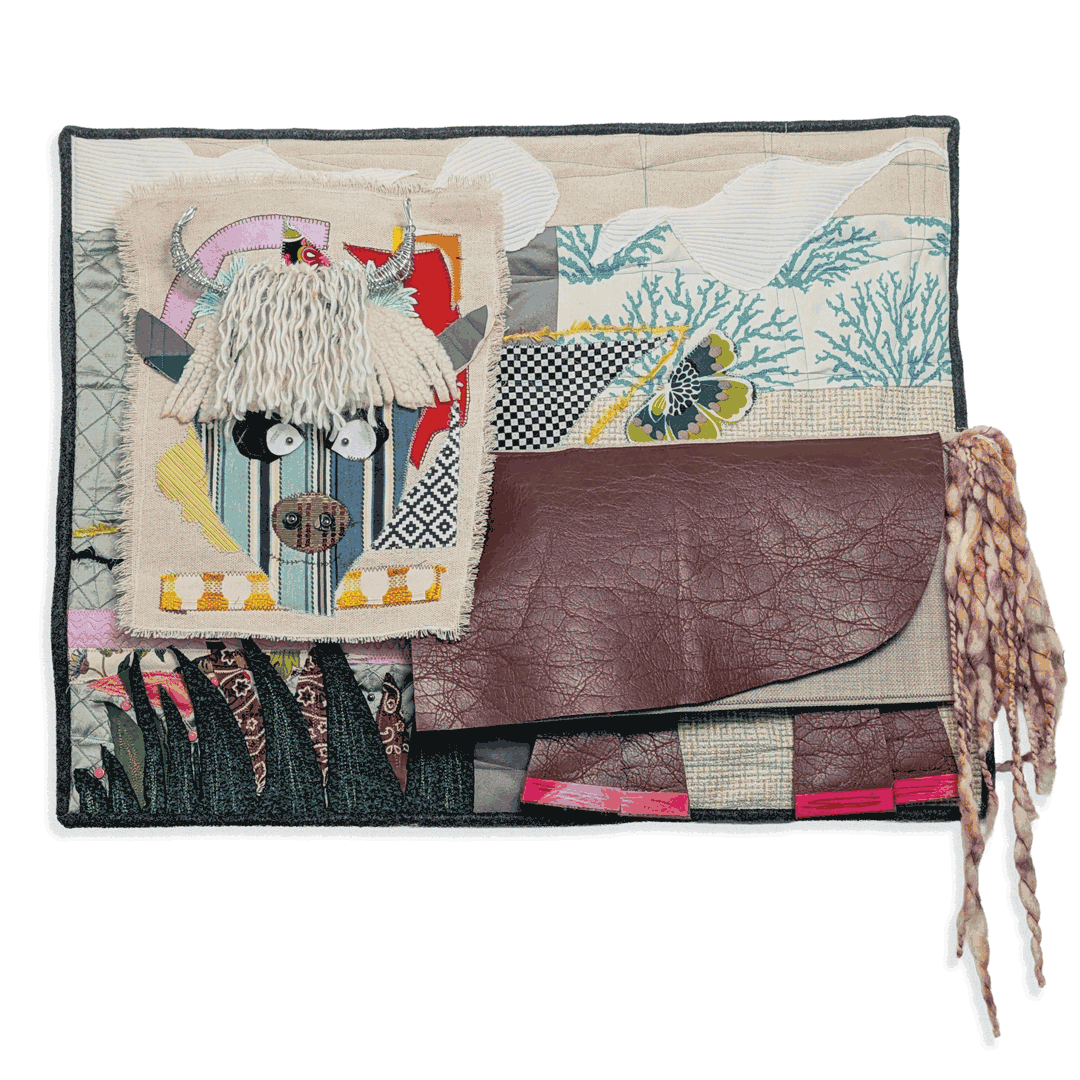
The Highlander
The Highlander is going to be at Found:RE Phoenix, as part of the “where the wild things stay” exhibit during the first half of 2026, […]
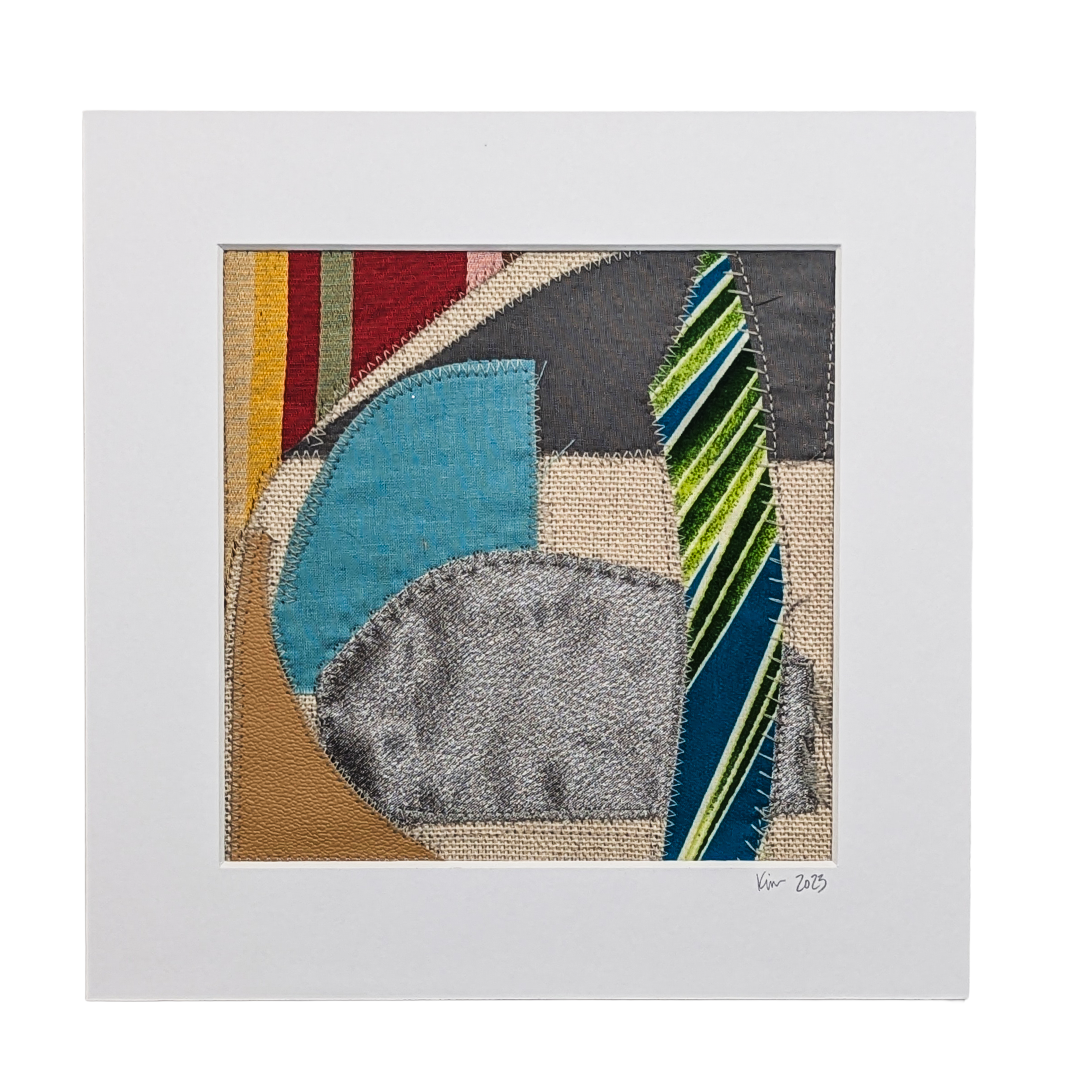
Small Works Series
Small works – 8″square or 8×10″ – fiber art, mixed media collage, all works matted. Ready to ship today.
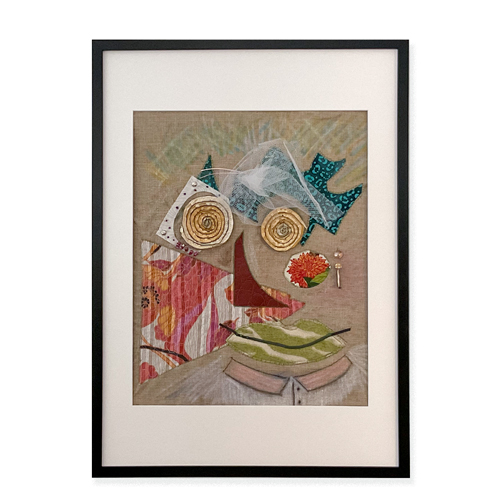
Mrs. Picasso – Mixed Media, Framed
Mrs. Picasso was assembled from random deadstock scraps and recycled materials. She’s the perfect embodiment of the sustainable art movement. Mixed media, framed, 21Wx29H.
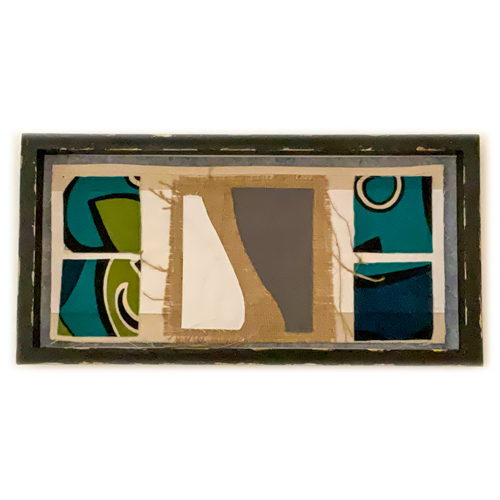
MIdnight in the Garden of Good and Evil, Framed
A study in textural contrast and repurposing. This abstract landscape utilizes frayed burlap and geometric fabric scraps to explore shadow and light.
Mixed media art is a versatile and expansive discipline that breaks away from the traditional boundaries of a single medium. Rather than being confined to only oil paint or clay, artists integrate various materials into a single cohesive work.
This can include a fusion of traditional art supplies—such as acrylics, ink, and charcoal—with unconventional items like repurposed textiles, metal scraps, found objects, and digital elements.
The primary characteristic of mixed media is its focus on the interaction between different textures and surfaces, allowing for a layered depth that is difficult to achieve with uniform materials.
The practice is often categorized by the techniques used, such as collage, assemblage, and altered objects. Collage typically involves layering two-dimensional materials like paper and fabric onto a flat surface, while assemblage takes a sculptural approach by combining three-dimensional objects into a structural whole.
Because there are no rigid rules governing what can be included, mixed media allows for a high degree of experimentation. Artists often use it to explore complex themes, using the history or "memory" of a specific found object—like an old photograph or a weathered piece of wood—to add conceptual weight to the visual experience.
From a technical standpoint, the success of a mixed media piece relies heavily on the compatibility of materials and the integrity of the substrate. Artists must consider how different adhesives react with various surfaces and how heavy objects will be supported.
For example, a heavy application of modeling paste or the inclusion of metal relics requires a sturdy base, such as a wooden cradle board, rather than standard paper. This technical challenge is part of the appeal, as it demands a problem-solving mindset and a deep understanding of the physical properties of the materials being used.
Ultimately, mixed media art is defined by its limitless potential for personal expression. It provides a framework where "mistakes" can be layered over and incorporated into the final design, fostering a process-oriented approach to creation.
By removing the silos between different artistic traditions, mixed media encourages a dialogue between the past and the present, the manufactured and the hand-made, resulting in works that are as tactile as they are visual.