
Art Quilt
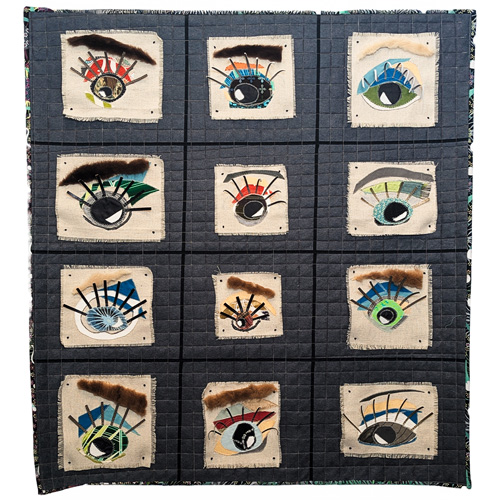
Facial Recognition
12 mixed-media portraits examine the dehumanizing lens of biometric tech. Raw-edge appliqué on a structured grid framework.
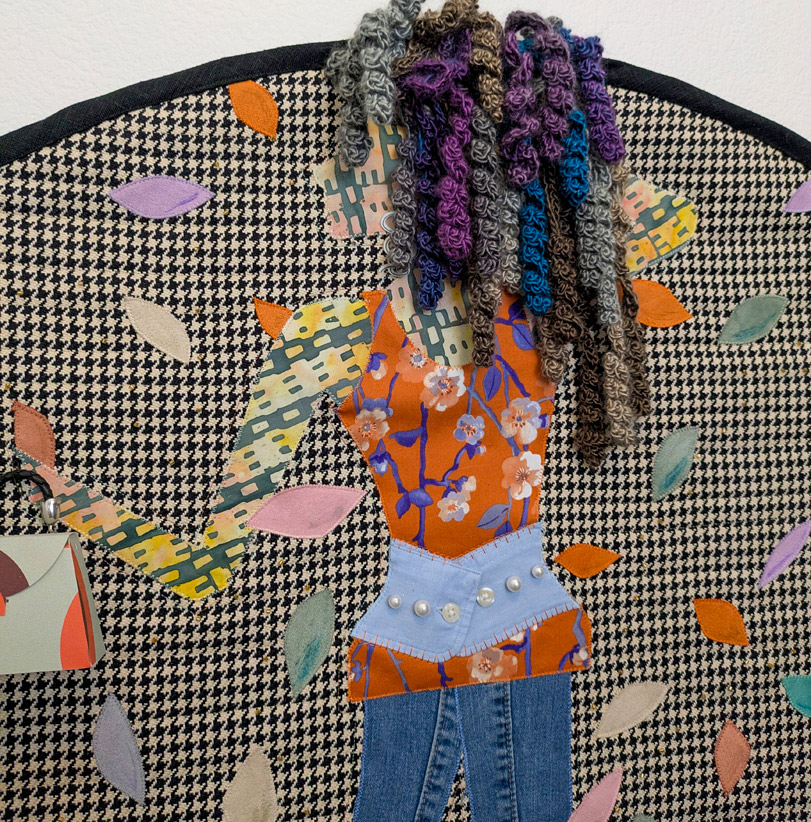
Woman, Untitled (2026)
Exploring the layers of modern identity. Kim Stuart’s Woman, Untitled blends structural denim with fluid movement in this 2026 textile work.
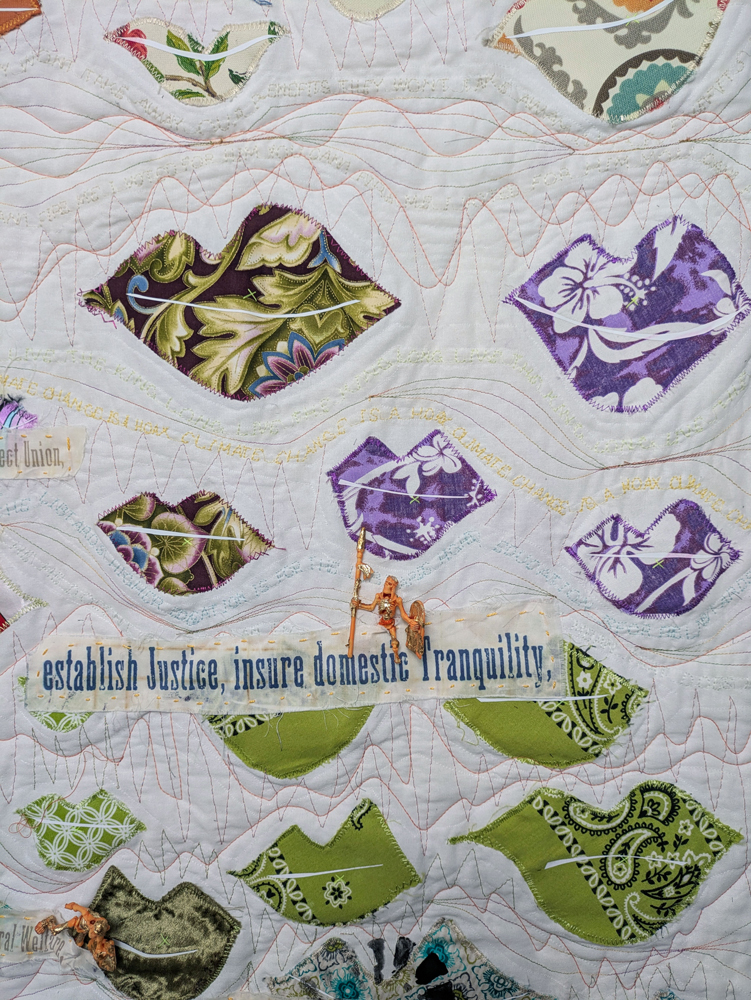
State of the Union Quilt
A textile rebellion mapping 60 voices over the Constitution. Mixed-media featuring army men, boot prints, and reclaimed fabrics.
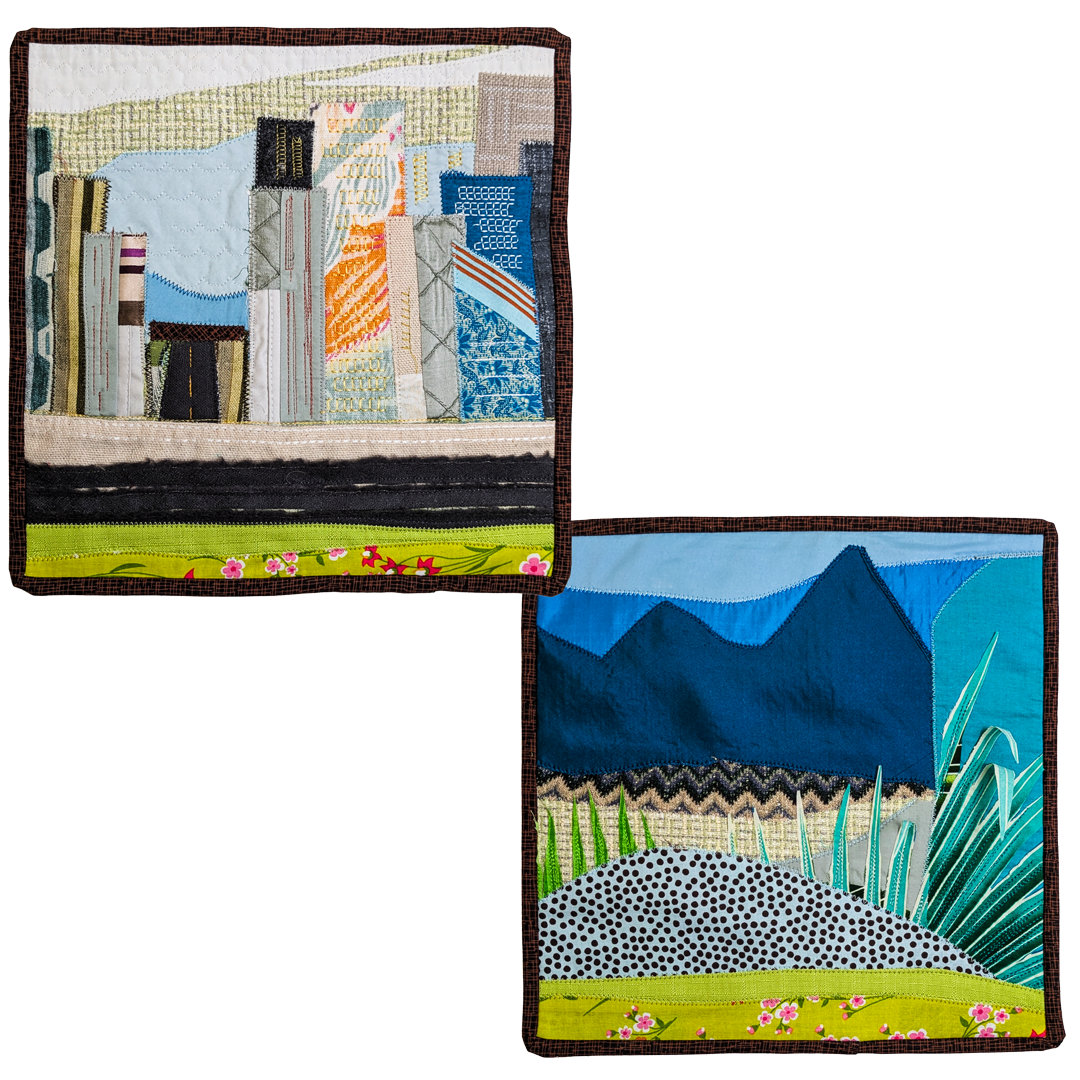
Landscape & Cityscape Pair
Manufactured meets natural in this Landscape & Cityscape Pair by artist Kim Stuart. Unifying textile diptych exploring shared geometric forms.
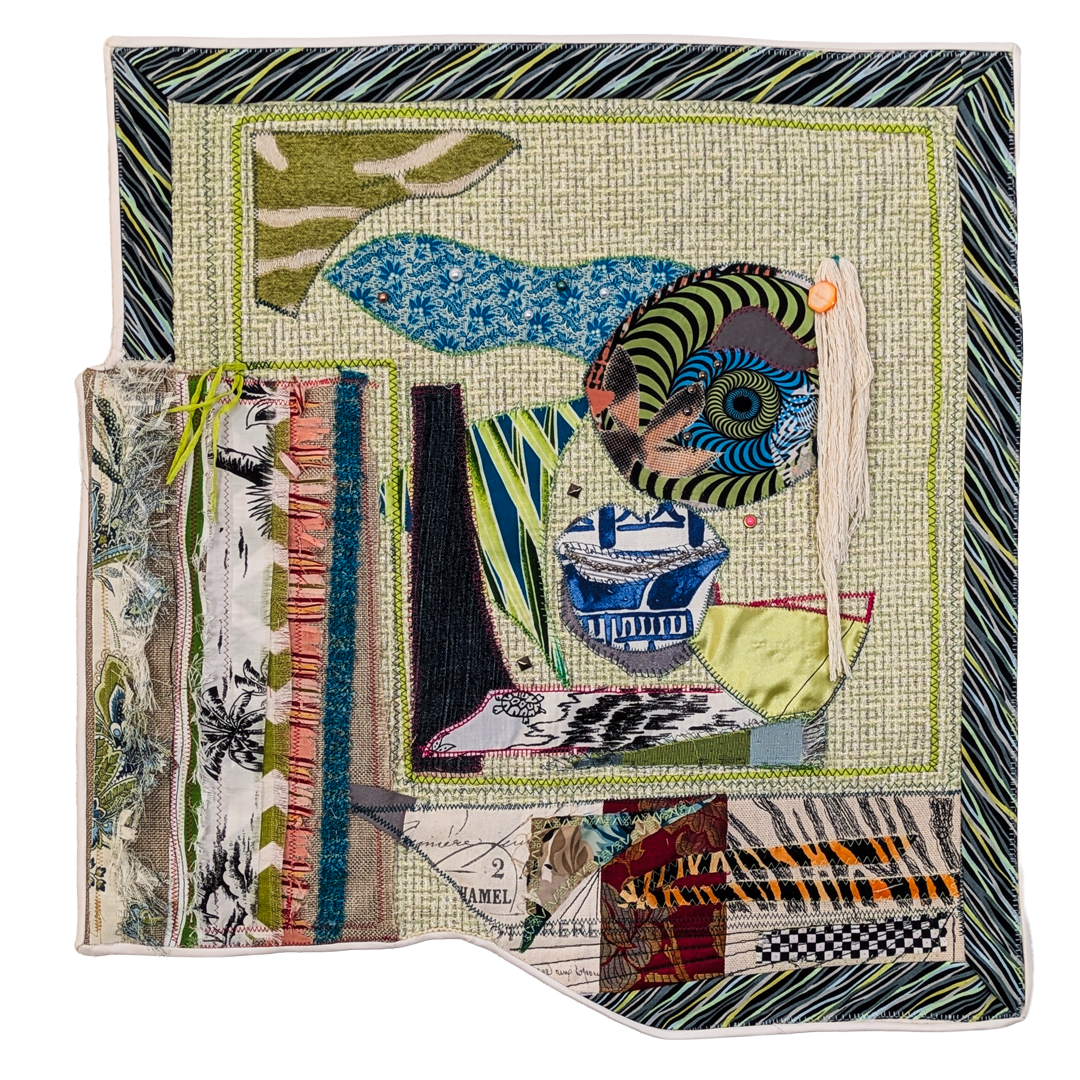
Hiding in Plain Sight
This piece is potentially ready to go to a new home, provided it finds one before I submit it to an exhibit call. If it’s […]
Art quilts represent a departure from traditional bedcoverings, moving the medium from a functional household item to a deliberate form of visual expression intended for display. While they retain the fundamental construction of three layers—a top, a middle batting, and a back held together by stitching—the primary goal is aesthetic and conceptual rather than utilitarian.
These works often incorporate nontraditional materials, including painted fabrics, digital imagery, and mixed media embellishments. By utilizing the quilt as a canvas, artists explore complex themes ranging from social commentary to abstract geometry, leveraging the inherent warmth and familiarity of textiles to engage the viewer.
The technical complexity of an art quilt lies in the mastery of diverse surface design and construction techniques. Artists may employ methods such as fabric dyeing, discharge printing, screen printing, or free-motion machine embroidery to create intricate patterns and textures. Unlike traditional quilting, which often relies on repetitive blocks, art quilts frequently use "improv" piecing or raw-edge appliqué to create fluid, organic compositions. The quilting stitches themselves serve a dual purpose: they provide necessary structural stability while acting as a secondary line-drawing element that adds physical dimension and shadow to the surface of the fabric.
From a structural standpoint, art quilts must be engineered for longevity and wall-mounting. This requires careful consideration of fabric tension and the weight of added elements, such as beads, found objects, or heavy thread work. Using archival-quality materials, such as high-thread-count cotton or silk and light-fast pigments, is essential to prevent degradation over time. The "finish" of an art quilt often involves specialized binding or facing techniques that allow the piece to hang flat and maintain its edges without the warping that can occur with traditional heavy use. This transition to a formal presentation style marks the quilt's status as a legitimate piece of fine art.
Ultimately, the art quilt is defined by its ability to bridge the gap between ancient craft traditions and contemporary artistic movements. It honors the history of needlework while pushing the boundaries of what fabric and thread can achieve. Because of their tactile nature, these works invite a closer inspection of the "hand" of the artist, revealing the thousands of individual stitches and decisions that contribute to the final image. As a result, art quilts occupy a unique space in the art world, offering a sensory and emotional depth that reflects both the meticulous patience of the maker and the transformative potential of the textile medium.